| vf_node_pictures_all | title (item) | field_cer_web | field_cer_navbox | g_geofield | g_geofield | |
|---|---|---|---|---|---|---|

|
English Electric Canberra |
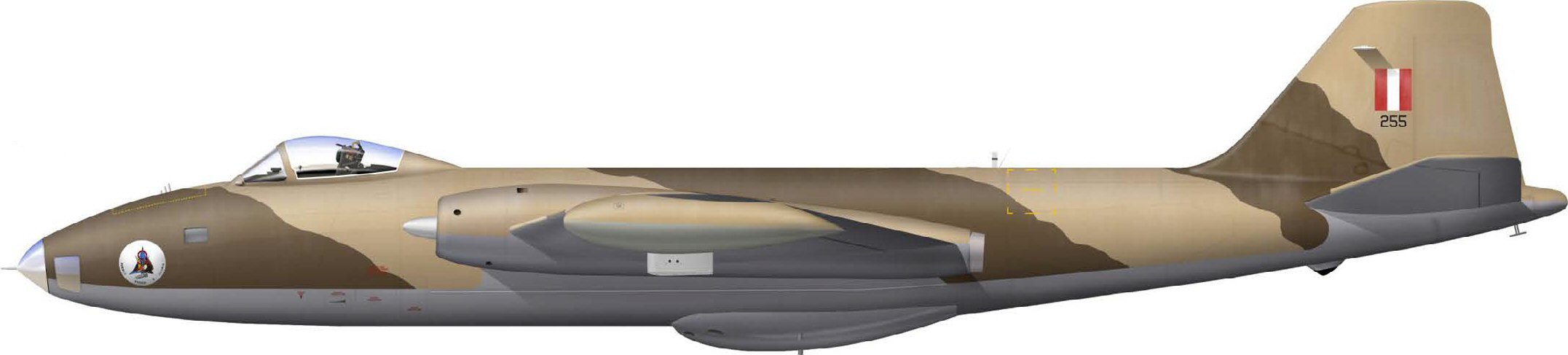
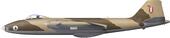
About 25 Canberra B.Mk. 2, T.Mk 4, and B(I).Mk 8 – all upgraded to a B(I).Mk 68-similar standard – were still available to GA.9 as of 1981. Three B(I).Mk 68s from EA.921 were prepared for action at Chiclayo, but they only flew one – daring – reconnaissance sortie over the Galapagos islands. All were painted in light stone (BS381C/361) and dark earth (BS381C/350) applied to a standardised camouflage pattern, and most were decorated with the GA.9 crest, usually applied on the left side of the front fuselage. Notable is not only the underwing pylon (rated for bombs of up to 1,000lbs/454kg), but also the addition of the antenna of the SRO-2 IFFtransponder in front of the cockpit, necessary to make them compatible with the FAP’s early warning radars and SA-3 SAMs of Soviet origin: a second set of the same antenna was applied somewhere below the rear fuselage. (Artwork by Tom Cooper)