| vf_node_pictures_all | title (item) | field_cer_web | field_cer_navbox | g_geofield | g_geofield | |
|---|---|---|---|---|---|---|
|
Fiat G.91 |
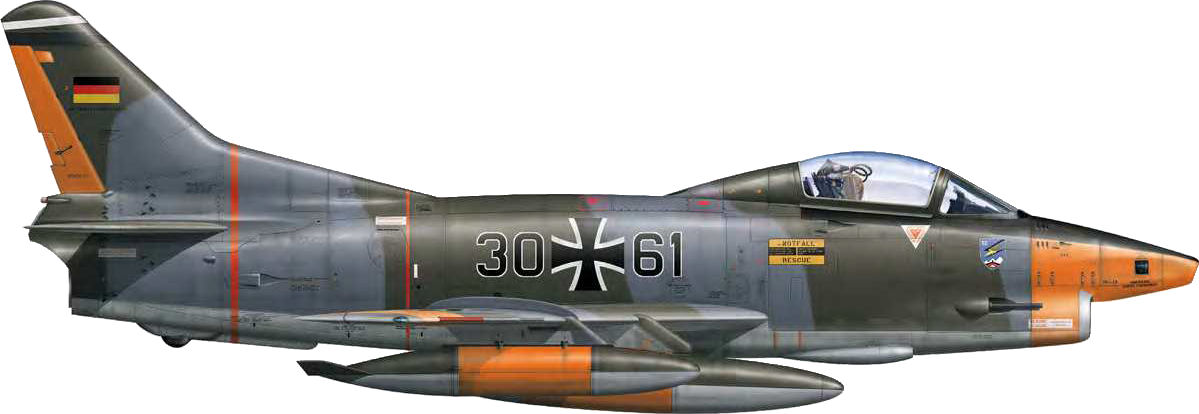
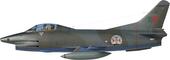
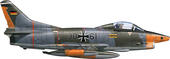
Fiat G.91R/3 30+61, Waffenschule 50,
Luftwaffe, Fürstenfeldbruck
The first German-built G.91R/3 made its maiden flight from the
Dornier factory at Oberpfaffenhofen during July 1961 and the type first
entered service with Aufklärungsgeschwader (AG, reconnaissance wing) 53
at Leipheim the following year. The test codes KD+311 were applied at the
factory to G.91R/3 w/n 321, replaced by ED+121 when it was assigned to
AG 54, which had formed at Erding on 1 April 1962 but moved to Oldenburg in January
1963. The rapid expansion of the Luftwaffe created personnel shortages within some
units and AG 54 disbanded on 1 October 1964 so that its resources could be reallocated to
other units. In the same month Leichtenkampfgeschwader 43 formed at Oldenburg from
the assets of AG 54 and Jagdgeschwader 72. The G.91 became XB+110 with the Lehr- und
Versuchsschwarm G.91 (‘teaching and experimental unit G.91’) within Waffenschule 50
(WaSLw, ‘weapons school’) at Fürstenfeldbruck. The unit was established in 1965 as a
trials unit to evaluate weapons, procedures and new systems on the G.91R. They included
the AS-20 missile and operations from autobahns, as well as spraying troops
during exercises to simulate attack with chemical weapons. On 1 January 1968 the
Luftwaffe adopted a new serial system and the G.91R/3 became 30+61. While
the test unit disbanded around 1970, 30+61 remained with
WaSLw 50 in its primary role of converting pilots to the ‘Gina’.
On 29 September 1978 WaSLw 50 was formerly retitled
Jagdbombergeschwader 49 (fighter-bomber wing 49), which
had been the identity the unit would have adopted in times
of war. The last G.91R/3 departed Fürstenfeldbruck
on 9 January 1980 for Oldenburg, where
many of the unit’s aircraft (including
30+61) were scrapped by
Luftwaffenversorgungsregiment 6.