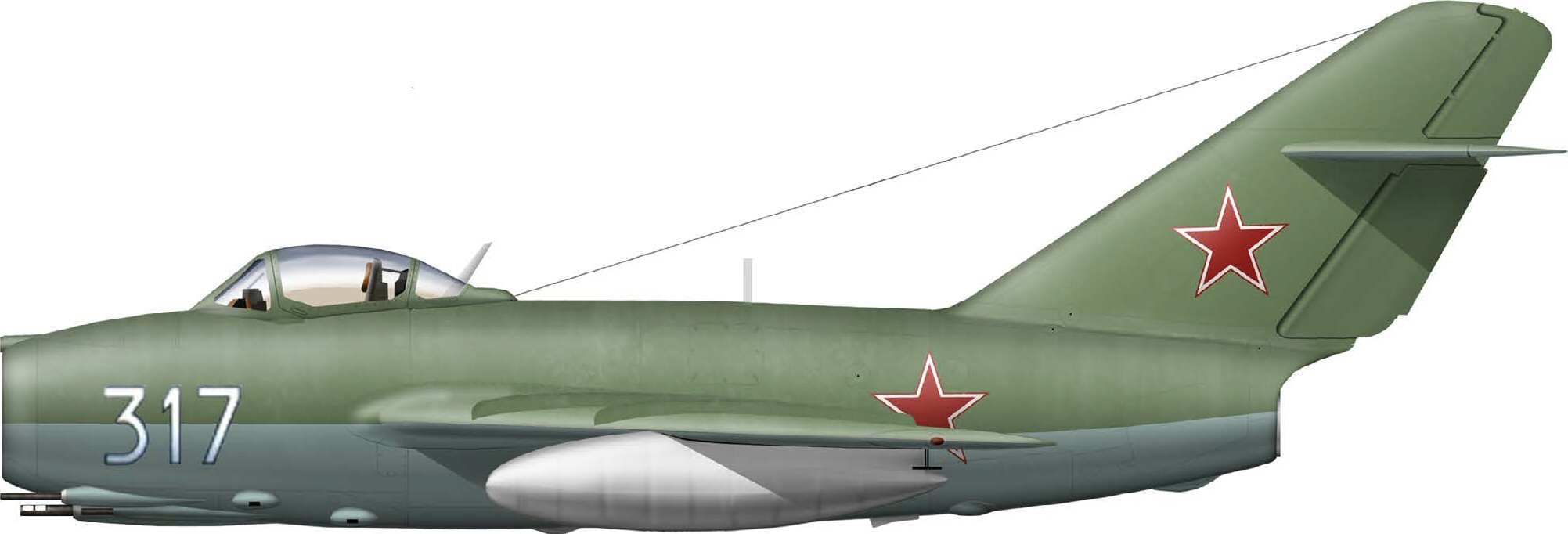
The usual method of painting MiG-15s (and all the other combat aircraft types in service with the PVO in the 1950s and 1960s) was relatively simple: after being assembled at the factory, each aircraft would receive a layer of varnish, followed by one layer of clear lacquer mixed with 10 percent aluminium powder, and then another consisting of clear lacquer mixed with 5 percent aluminium powder. With this near-transparent, highly polished colour ‘mirroring’ surroundings, while also showing the colour of metal surfaces on which it was applied (where darker, bluish surfaces, like air brakes, were usually made of steel, while the rest was of aluminium), it became colloquially known as ‘silver grey’. By 1953, experience from the Korean War prompted the Soviets to start camouflaging their MiG-15s. Around the same time the Soviet Union accepted the British Standard 381C as the standard for its colour production. As a result, this example, which served with the Soviet air defences in the Far East in the 1953–1954 period, had its top surfaces painted in grey-green BS381C/283, and undersides in light admiralty grey BS381C/697. (Artwork by Tom Cooper)