| vf_node_pictures_all | title (item) | field_cer_web | field_cer_navbox | g_geofield | g_geofield | |
|---|---|---|---|---|---|---|
|
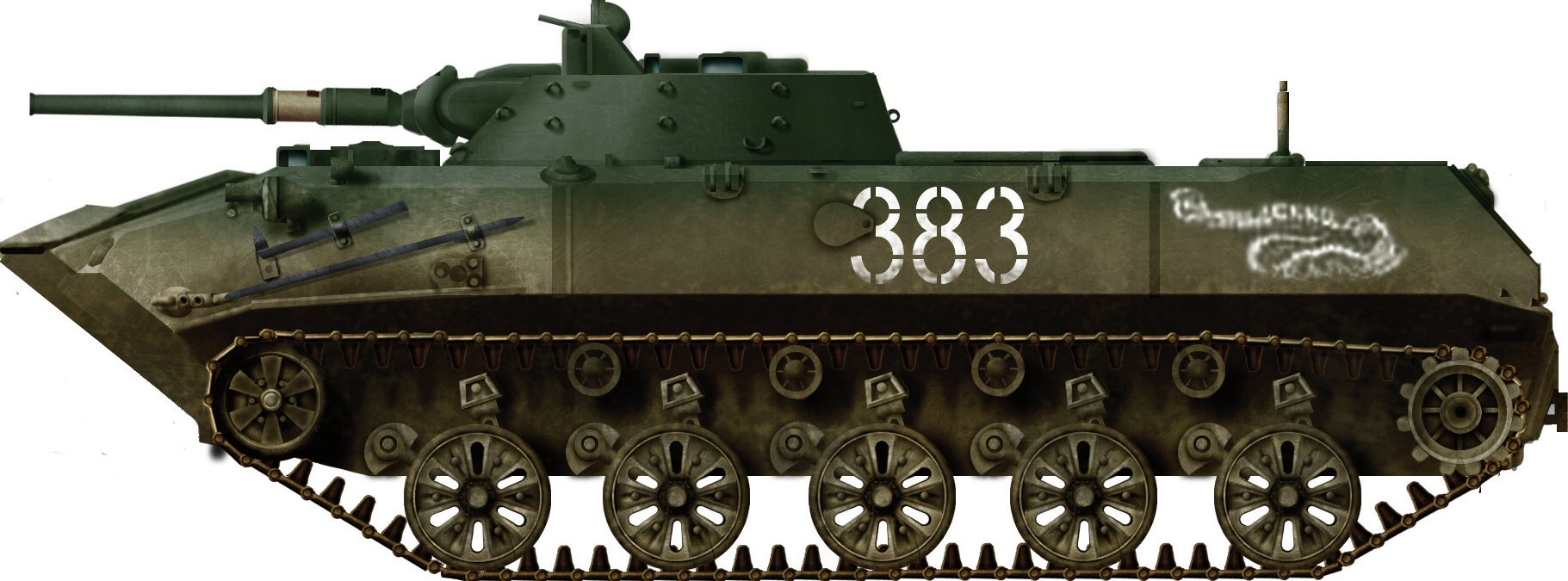
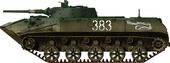
BMD-1 (Object 915) |
During the Cold War, the General Staff of the Soviet Armed Forces sought for ways to mechanise all branches of the ground forces, including the, nominally ‘light’, Airborne Assault troops. In the late 1960s, its requirement for a lightly armoured fire-support vehicle that could be transported by Mi-6 helicopters and An-12 transport aircraft, or even dropped by a parachute from Il-76 transports that were under development, led to the emergence of the BMD-1: an entirely new vehicle, with a turret similar in design and carrying the same armament as that of the contemporary BMP-1 IFV, mounting a low-pressure 73mm gun with 28 rounds (derived from the rockets used by the RPG-7), a co-axial PKT 7.62mm calibre machine gun and an anti-tank missile system (the Malyutka 9M14 (AT-3 Sagger), or in the BMD-1P, the Fagot 9K111 (AT-4 Spigot) anti-tank guided missile system (neither system is shown here as they were rarely deployed in Afghanistan). The vehicle had a crew of three (commander, gunner, and driver), and could accommodate five additional troops positioned around the interior in very cramped conditions (in practice, troops often preferred to ride exposed on the rear deck). Large numbers of BMD-1s were deployed by all Airborne Assault units early during the Soviet military intervention in Afghanistan. (Artwork by David Bocquelet)