picture 181882

Submitted by aua on
field_i_picture
vf_node_items
field_i_picture title (item) field_cer_web field_cer_navbox g_geofield
BTR-152 A második világháború utáni szovjet, orosz és ukrán harcjárművek - Soviet and Russian armoured fighting vehicles after World War II, modern gumikerekes lövészpáncélosok és páncélozott szállító harcjárművek - Modern wheeled infantry fighting vehicles and armoured personnel carriers - Moderne Radpanzer und geschützte Fahrzeu
field_in_sequence
7
field_in_sequence2
1
field_t_remark

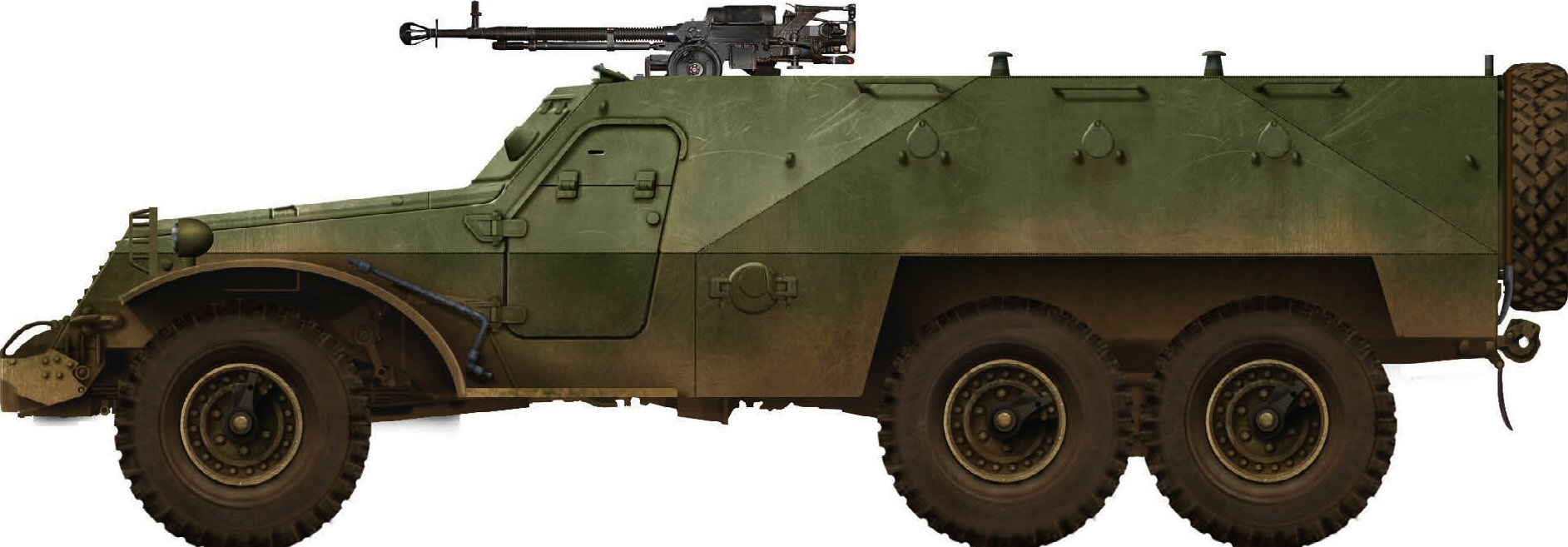
The Cuban Military Mission in Angola (MMCA) had no presence in Cassinga: the majority of its units were deployed along the main Angolan-Cuban defence line stretching from Namibe via Lubango and Capelongo, further north. Thus, when the SADF attacked the SWAPO/PLAN camp, the MMCA scrambled its battalion-sized tactical group GT-2, based 15-kilometres away at Tchamutete to intervene. Entirely staed by the Cubans, GT-2 included a motorised infantry company equipped with eight BTR-152s, all of them armed with SGMB 7.62mm light machine guns (inset), or with 14.5mm DShK heavy machine guns (main illustration). (Artwork by David Bocquelet)

field_t_subtype
e left
fr_quality
No votes yet